With global temperatures rising and warmer, more humid weather patterns
becoming more common across parts of the Northern Hemisphere, indoor
humidity is becoming harder to ignore. In many homes, conditions that
once shifted slowly with the seasons can now change in a single day:
damp air after showers, cooking, or warm weather, then drier air when
heating, cooling, or ventilation takes over.
Those swings can affect more than comfort. Humidity that sits too high
or too low may contribute to dry skin, irritated eyes, coughing,
respiratory sensitivity, stressed houseplants, condensation, mould risk,
and, over time, damage to the fabric of a home. Heat and humidity
together can also put extra strain on the body, because humid air makes
it harder for sweat to evaporate and cool us down.
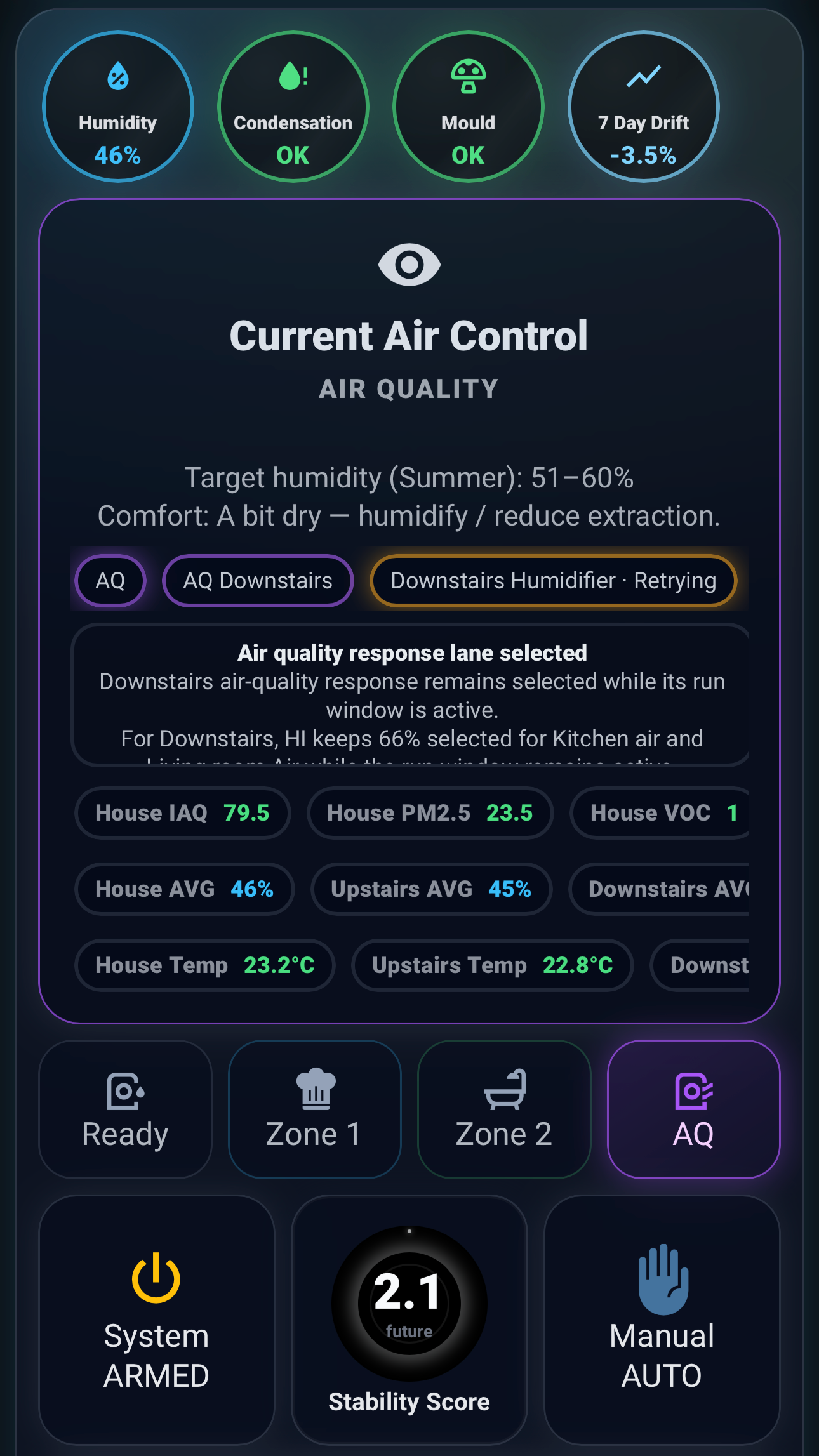
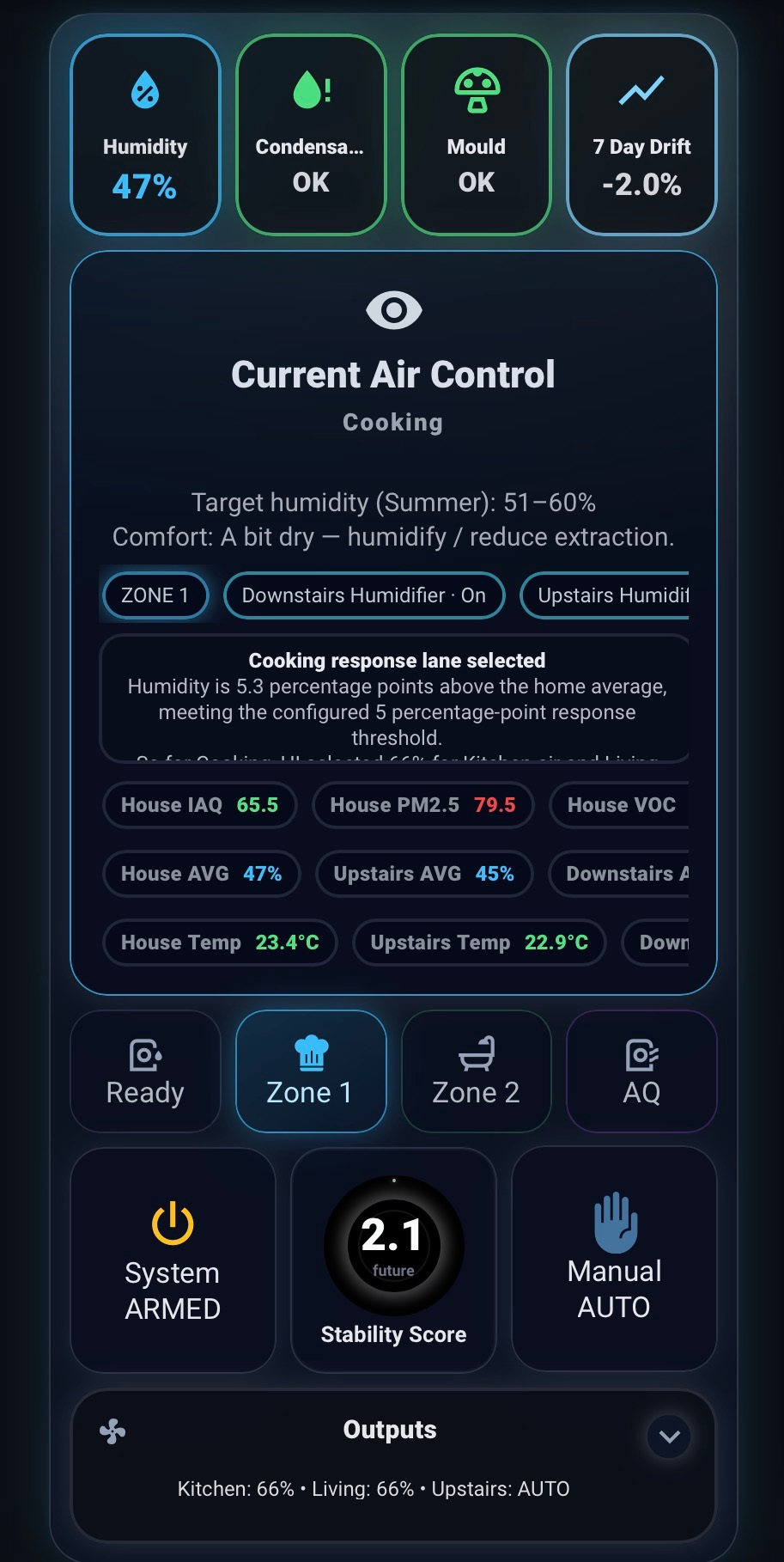
Humidity Intelligence does not replace good ventilation, heating,
cooling, or maintenance. It helps make the indoor picture easier to
understand by bringing humidity, temperature, dew point, room behaviour,
air quality, and device states together inside Home Assistant, then
explaining what is changing, why it matters, and what the next sensible
action may be to support a more stable indoor environment.